Monday, March 31, 2008

Amid protests China gets Olympic torch

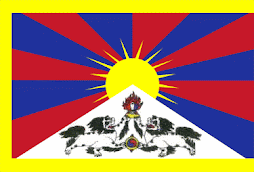
Chinese spectators cheered Sunday as Greece handed off the Olympic flame for its journey to Beijing and relay through 20 countries. But protesters brandishing Tibetan flags stole the limelight.

Some two dozen activists chanted "Save Tibet!" and unfurled a banner reading "Stop Genocide in Tibet" before police intervened, detaining 21 protesters outside the Panathenian Stadium. Most were later freed.

A police cordon prevented the demonstrators from disrupting the final leg of Greece's relay from the Acropolis to the marble stadium, the venue of the first modern Olympics in 1896.

The relay has become a magnet for Tibetan protesters and human rights activists, who disrupted the March 26 flame-lighting ceremony in Athens and dogged the weeklong Greek leg of the relay.

"We just wanted to show our support for Tibet, peacefully, and when we displayed the flags we were taken away by police," said Klara Vrhova, a Czech member of the Students for a Free Tibet group.
Marina Staroyianni, a Greek member of the group, said protesters wanted "to let the whole world know that China is violating human rights" in Tibet.
"A lot of people are now talking about the problem, throughout the world," she added.

The flame goes Tuesday to Almaty, Kazakhstan, and then on to Istanbul, Turkey, and St. Petersburg, Russia. Those stops are not expected to bring problems, but the following three could: London, Paris and San Francisco.

London's route on April 6 is sure to be lined by thousands of demonstrators, who are expected to have a wreath-laying ceremony to commemorate those killed in Tibet's recent unrest. Tibetan exiles say almost 140 people have died, while the Beijing government puts the number at 22.

Pro-Tibet demonstrators are expected to be just as numerous in Paris on April 7. French President Nicolas Sarkozy is the first European leader to suggest a boycott of the opening ceremony as a possibility to protest China's handling of the unrest in Tibet.

In San Francisco, the only North American city hosting the torch, officials shortened the April 9 route through the city and have abbreviated the ceremonies. Mayor Gavin Newsom has said no one will be prevented from expressing his views, but permits are required to gather near the torch.

Another difficult stop comes April 17 in New Delhi. India is home to Tibet's government-in-exile and many Tibet rights groups are located in the country.

Activists want Chinese authorities to cancel plans to carry the flame through Tibet on its way to Mount Everest for the first time. China has dismissed the demand.
"The torch will for the first time ascend the summit of the world, thereby testifying to the great strength of the Olympic movement in marking the progress of human civilization," Liu said after receiving the flame.
In

Sunday, March 30, 2008

31 MARÇO - DIA DE ACÇÃO GLOBAL PELO TIBETE

Neste dia Grupos de Apoio ao Tibete em 27 países, realizarão acções de modo a que o foco de atenção se desvie da chegada da tocha Olímpica a Pequim, e se centre nos Tibetanos, no Tibete.

Os Grupos de Apoio ao Tibete solicitarão que a tocha Olímpica não atravesse áreas Tibetanas, ao mesmo tempo que pretendem lembrar ao mundo o quanto os Tibetanos estão a sofrer.
No dia 27 de Março, um grupo de 30 monges teve a incrível coragem de protestar frente a um grupo de jornalistas estrangeiros, que o governo Chinês havia levado a Lhasa no âmbito de uma visita extremamente controlada.

Em Lisboa, o Grupo de Apoio ao Tibete juntamente com a União Budista Portuguesa e o apoio da Amnistia Internacional- Secção Portuguesa, realizarão Concentração frente ao Comité Olímpico de Portugal, pelas 19horas.
C.O.P - Travessa da Memória, 36 - Ajuda (próximo da igreja da Memória)
Juntem-se a nós, pelo povo Tibetano, e tragam os vossos amigos, bem como velas, cartazes e flores.
No local, poderão assinar carta dirigida ao Presidente do C.O.P. mediante a qual apelaremos a que o Comité apresente este pedido ao Comité Olímpico Internacional durante a próxima semana, de modo a que a Tocha Olímpica não atravesse o Tibete.
E porque não deve a tocha atravessar o Tibete ?
* Acreditamos que a sua passagem pelo Tibete contribuiria negativamente na evolução dos acontecimentos, na medida em que provocaria mais protestos e consequentemente seriam realizadas mais detenções, logo mais tortura e eventual perda de vida de Tibetanos.
* A China está a usar os Jogos Olímpicos para selar a sua ocupação sobre o Tibete e ganhar legitimidade relativamente às suas terríveis políticas no Tibete, que levaram a que os Tibetanos recorressem a tamanhos protestos como os que temos acompanhado, desde 10 de Março.

Contamos convosco !

Não concordamos...

"The Tibet issue is completely China's internal affairs. No foreign countries or international organizations have the right to interfere in it," said Foreign Ministry spokeswoman Jiang Yu, according to the official Xinhua news agency.

In
http://edition.cnn.com/2008/WORLD/asiapcf/03/30/china.tibet.ap/index.html

Saturday, March 29, 2008

Declaração MNE da UE

Os ministros dos Negócios Estrangeiros da União Europeia (UE) aprovaram hoje uma declaração pedindo o "fim da violência" no Tibete, descartando contudo de momento pressionar as autoridades chinesas com um boicote político aos Jogos Olímpicos de Pequim.

O texto, aprovado por unanimidade, nem sequer menciona a possibilidade de vincular os Jogos com a condenação à repressão exercida pelo governo chinês na região do Tibete.

A UE "reitera a sua profunda preocupação sobre os acontecimentos" e "condena todo o tipo de violência, pedindo para que os detidos sejam tratados conforme as leis internacionais e que se respeite a liberdade de informação sobre o conflito.

Os vinte e sete membros da UE alinham com os apelos do líder espiritual e político dos tibetanos, o Dalai Lama, a favor da não violência e da "autonomia e não independência" do Tibete.

Os ministros dos Estrangeiros dos países da União Europeia apoiam a causa com um diálogo construtivo dirigido a questões fundamentais, designadamente a preservação da língua, cultura, religião e tradicões tibetanas.

Por último, a declaração assegura que a UE "continuará prestando toda a sua atenção à situação dos direitos humanos na China".
In

Informações

Hoje eclodiram novos protestos em dois locais da capital Tibetana, o mosteiro Ramoche e o templo Jokhang.
Agência noticiosa Chinesa informou que as famílias de 18 civis, que falecerem nos motins de Lhasa, receberão $28,500, assim como assistência médica gratuita, enquanto que os proprietários de lojas e resturantes destruídos receberão auxílio para a respectiva reconstrução.
O governo Chinês pretende desta forma criar rapidamente um clima de calma aparente, até porque cerca de 24 diplomatas de vários países de encontram neste momento no Tibete, em viagem organizada pelo governo Chinês. Esta viagem vem na sequência da permissão de visita durante dois dias a igual número de jornalistas.
In
http://news.yahoo.com/s/ap/20080329/ap_on_re_as/china_tibet

HELP

Tibetan spiritual leader Dalai Lama on Saturday appealed to the world community to "please help" resolve the crisis in his homeland that has been rocked by deadly anti-Chinese protests.
"We have no power except justice, truth, sincerity... that is why I appeal to the world community to please help," the Buddhist icon told a news conference in the Indian capital, where he was conducting meditation sessions.

"I am here helpless, I just pray," said the exiled spiritual leader two weeks after anti-Chinese protests in the Himalayan region turned bloody, leading to calls for a boycott of the August Beijing Olympic Games.
In

OPINION: THE CRY OF TIBET

By WANG LIXIONGT
he Wall Street Journal
March 28, 2008; Page A12

The recent troubles in Tibet are a replay of events that happened two decades ago. On Oct. 1, 1987, Buddhist monks were demonstrating peacefully at the Barkor -- the famous market street around the central cathedral in Lhasa -- when police began beating and arresting them. To ordinary Tibetans, who view monks as "treasures," the sight was intolerable -- not only in itself, but because it stimulated unpleasant memories that Tibetan Buddhists had been harboring for years.

A few angry young men then began throwing stones at the Barkor police station. More and more joined, and then they set fires, overturned cars and began shouting "Independence for Tibet!" This is almost exactly what we saw in Lhasa two weeks ago.

The fundamental cause of these recurrent events is a painful dilemma that lives inside the minds of Tibetan monks. When the Chinese government demands that they denounce their spiritual leader, the Dalai Lama, monks are forced to choose between obeying, which violates their deepest spiritual convictions, and resisting, which can lead to loss of government registry and physical expulsion from monasteries.

From time to time monks have used peaceful demonstrations to express their anguish. When they have done this, an insecure Chinese government, bent on "annihilating unstable elements" in the "emergent stage," has reacted with violent repression. This, in turn, triggers violence from Tibetans.

In recent decades, the Chinese government's policy for pacifying Tibet has been to combine the allure of economic development on the one hand with the threat of force on the other. Experience has shown that this approach does not work.

The most efficient route to peace in Tibet is through the Dalai Lama, whose return to Tibet would immediately alleviate a number of problems. Much of the current ill will, after all, is a direct result of the Chinese government's verbal attacks on the Dalai Lama, who, for Tibetan monks, has an incomparably lofty status. To demand that monks denounce him is about as practical as asking that they vilify their own parents.

It should be no surprise that beatings of monks and closings of monasteries naturally stimulate civil unrest, or that civil unrest, spawned in this way, can turn violent.

Why aren't these simple truths more obvious? Phuntsog Wanggyal, a Tibetan now retired in Beijing who for years was a leading Communist official in Tibet, has observed that a doctrine of "anti-splittism" has taken root among Chinese government officials who deal with religion and minority affairs, both in central offices in Beijing and in Tibet. Having invested their careers in anti-splittism, these people cannot admit that the idea is mistaken without losing face and, they fear, losing their own power and position as well.

Their ready-made tag for everything that goes wrong is "hostile foreign forces" -- an enemy that justifies any kind of harsh or unreasoning repression. When repeated endlessly, anti-splittism, although originally vacuous, does take on a kind of solidity. Careers are made in it, and challenging it becomes impossible.

I am a supporter of the Dalai Lama's "middle way," meaning autonomy for Tibet in all matters except foreign affairs and national defense. This arrangement eventually would have to mean that Tibetan people select their own leaders -- and that would be a major change from the way things are now. Tibet is called an "autonomous region," but in fact its officials are all named by Beijing, and are all tightly focused on their own personal interests and the interests of the Communist Party. Tibetans can clearly see the difference between this kind of government and self-rule, and there is no way that they will support bogus autonomy.

It follows -- even if this is a tall order -- that the ultimate solution to the Tibet problem must be democratization of the Chinese political system itself. True autonomy cannot come any other way.
It is time for the Chinese government to take stock of why its long-term strategy in Tibet has not worked, and to try something else. The old problems remain, and they are sure to continue, perhaps in places like the "Uighur Autonomous Region" of Xinjiang, if a more sensible approach is not attempted.

Mr. Wang, a Beijing-based writer, was the organizer of the recent 12-point statement on Tibet by 30 Chinese intellectuals. This article was translated from the Chinese by Princeton University Prof. Perry Link.
In

Monges presos

Após dias de tensão e protestos no condado de Ngaba, desde 15 de Março, e que culminaram na morte de 23 pessoas bem como detenções e ferimentos em mais de 100 pessoas, a Polícia Armada do Povo e o Bureau de Segurança Pública procederam à detenção de mais de uma centena de monges do mosteiro de Ngaba Kirti, na sequência de uma operação relâmpago efectuada ontem de tarde.

Estudantes Tibetanos entram em edifício da O.N.U.

Cerca de 20 estudantes Tibetanos do ensino secundário escalaram uma parede, que rodeava o edifício das Nações Unidas em Kathmandu, envergando cartazes onde se podia ler "Free Tibet", bem como apelando às Nações Unidas que auxiliassem o Tibete.

John Brittain, porta-voz das N.U, descreveu os jovens como uns intrusos educados que se sentaram na relva, onde escreveram as suas queixas depois entregues aos oficiais das N.U.. Foi-lhes oferecido almoço e posteriormente foram conduzidos a casa.


O Nepal tem sido palco de vários protestos, por parte dos Tibetanos e na sequência da repressão Chinesa no Tibete. O governo Nepalês, a pedido do seu poderoso vizinho, anunciou já que fechará o acesso ao Monte Evereste do lado nepalês, de modo a impedir protestos anti-Chineses.

A China pretende enviar a Tocha Olímpica até ao topo do Monte Evereste no início de Maio...


In
http://www.nytimes.com/2008/03/29/world/asia/29tibet-web.html?_r=1&oref=slogin

Friday, March 28, 2008

Diplomatas visitam Tibete

O Reino-Unido, França e EUA estão entre os países convidados para uma viagem de dois dias à capital Tibetana Lhasa.
Os EUA felicitaram a iniciativa no entanto afirmaram que diplomatas e observadores deveriam ser autorizados a visitarem as áreas que rodeiam Lhasa.
A visita vem na sequência da abertura de Lhasa aos jornalistas. Enquanto isso os Ministros dos Negócios Estrangeiros da U.E. reunem- se hoje e amanhã na Eslovénia, de modo a debaterem um eventual boicote à cerimónia de abertura dos Jogos Olímpicos.
In
http://news.bbc.co.uk/2/hi/asia-pacific/7318035.stm